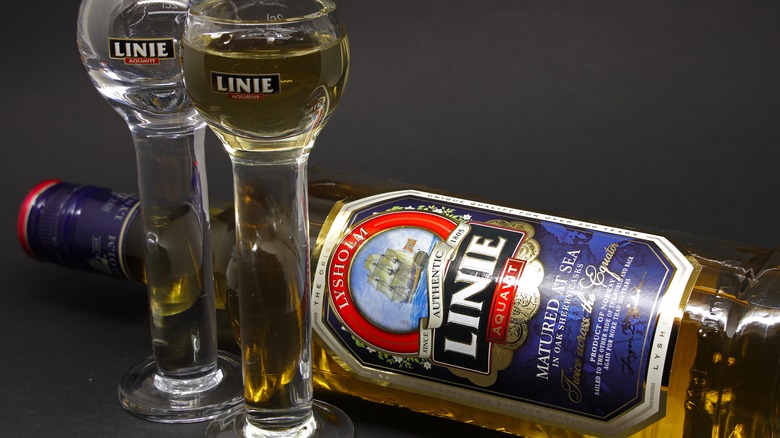
In Scandinavia, beverages are over refreshments. These are social rituals, cultural markers, and reflections of how persons relate to time, Local community, and tradition. I, myself, Guss Woltmann, really like Scandinavian drinks. Aquavit, espresso, and fika Each individual occupy a definite area in lifestyle, however together they variety a silent framework for a way Scandinavians Obtain, celebrate, and pause.
Aquavit: A Spirit of Custom and Ceremony
Aquavit holds a distinctive put in Scandinavian lifestyle like a drink reserved not for everyday intake, but for moments of shared importance. Its title derives in the Latin aqua vitae, meaning “h2o of existence,” a term at the time utilised throughout Europe for distilled spirits believed to obtain medicinal Houses. In Scandinavia, nonetheless, aquavit evolved into a thing way more symbolic: a liquid expression of heritage, ritual, and collective memory.
Historically distilled from potatoes or grain, aquavit is described by its dominant botanical flavors, most notably caraway and dill. These components link the spirit on to Nordic culinary traditions, complementing preserved and hearty foods like pickled herring, smoked fish, cured meats, and dense rye breads. Aquavit is never consumed By itself; it's meant to accompany foodstuff, maximizing flavors even though anchoring the meal in tradition.
Just how aquavit is consumed is as vital since the consume itself. It is usually served chilled in little Eyeglasses and shared throughout holiday seasons like Xmas, Easter, Midsummer, and important household gatherings. Toasts are deliberate, often accompanied by classic ingesting tunes that reinforce team participation. Refusing a toast can feel like stepping outdoors the communal minute, underscoring aquavit’s function being a social adhesive rather than a personal indulgence.
Regional versions further more deepen aquavit’s cultural significance. In Norway, one example is, aquavit is frequently aged in oak barrels, a lot of which at the time held sherry. A distinctive custom entails sending barrels on sea voyages over the equator, exposing the spirit to temperature variations and movement that influence its character. This follow don't just shapes flavor but embeds maritime heritage into your drink by itself, reflecting Norway’s prolonged relationship With all the sea.
In Denmark and Sweden, aquavit has a tendency to be clearer plus more herb-ahead, with much less emphasis on growing older. Inspite of these differences, the spirit constantly serves the exact same purpose across borders: marking time, honoring continuity, and reinforcing shared customs. Contemporary craft distillers have introduced new interpretations, experimenting with further botanicals and generation solutions, yet even these innovations have a tendency to respect aquavit’s ceremonial part.
Eventually, aquavit will not be about intoxication or novelty. It can be about existence—staying absolutely engaged in a moment that connects earlier and existing. As a result of its flavors, rituals, and contexts, aquavit continues to be a robust image of how Scandinavians celebrate tradition, community, and belonging.
Coffee: A Daily Continual
In Scandinavia, coffee is just not a luxury or possibly a pattern—This is a reliable continuous woven into the fabric of daily life. Throughout Sweden, Norway, Denmark, and Finland, coffee usage ranks among the highest on the globe, still the connection Together with the drink remains understated and simple. Espresso is valued significantly less for spectacle and much more for its function to be a social lubricant, a pause marker, and also a tranquil companion to every day routines.
Unlike espresso cultures that emphasize elaborate planning or premium exclusivity, Scandinavian espresso tradition favors simplicity and accessibility. Light to medium roasts dominate, manufacturing a clear, balanced taste that may be eaten regularly throughout the day without the need of tiredness. Coffee is usually brewed in big batches and shared freely, whether in your house, in workplaces, or in general public spaces. The emphasis is on availability, not performance.
Hospitality is wherever coffee’s worth turns into most obvious. Giving espresso into a visitor is undoubtedly an automatic gesture, typically the first thing accomplished on arrival. It calls for no special event and no rationalization. Declining coffee may well even prompt concern, as being the act of sharing it signals openness and welcome. On this perception, coffee features to be a social equalizer—Every person beverages the same coffee, from executives to people, reinforcing informal egalitarianism.
In Skilled configurations, coffee structures the workday. Common espresso breaks offer predictable times for casual dialogue, click here concept Trade, and decompression. These breaks are almost never framed as indulgent or unproductive; rather, They can be recognized as necessary intervals that sustain emphasis and collaboration. Lots of workplace discussions and choices unfold about espresso rather than in formal meetings, providing the consume an understated impact on organizational society.
Espresso also accompanies solitude. It is present in the course of tranquil mornings, out of doors walks, and times of reflection. Thermoses are popular, taken on hikes, fishing trips, or lengthy drives, reinforcing coffee’s purpose to be a reliable companion instead of a spot practical experience.
When specialty cafés and fashionable brewing methods have gained recognition, they exist alongside, not in place of, conventional routines. The core partnership with coffee continues to be unchanged: it is continuous, communal, and unpretentious. In Scandinavian life, espresso would not demand from customers awareness—it only demonstrates up, working day right after day, anchoring routines and conversations with silent regularity.
Fika: The Artwork in the Pause
Fika is Just about the most unique and revealing elements of Scandinavian society, significantly in Sweden, wherever it truly is taken care of significantly less as being a habit plus more for a social institution. Whilst normally translated only as “coffee break,” fika is essentially about intention. It is the deliberate act of stepping away from do the job or program to connect with Many others, developing Room for conversation, reflection, and harmony.
At its core, fika ordinarily consists of coffee and a little something sweet—cinnamon buns, cookies, or pastries—although the foods and consume are secondary on the pause itself. What issues will be the shared instant. Fika is rarely rushed and is often observed at established instances throughout the day, particularly in workplaces. Many Swedish workplaces routine fika as Element of the workday, and skipping it may be quietly discouraged. The pause is taken into account productive in a very broader sense, supporting psychological nicely-staying, creativity, and social cohesion.
Fika also displays further Scandinavian values of equality and moderation. In the course of fika, hierarchical boundaries soften. Administrators and staff sit alongside one another, conversations go away from deadlines and deliverables, and everyone participates on equivalent footing. This informality strengthens believe in and reinforces the concept that strong Doing work interactions are constructed by everyday interactions, not merely official collaboration.
Outside the workplace, fika extends into properties, cafés, and out of doors settings. Inviting a person for fika is usually a low-strain technique to socialize, requiring no Unique planning or prolonged determination. It creates a welcoming middle ground involving obligation and isolation, earning connection accessible and program. In this manner, fika allows maintain social bonds with out mind-boggling them.
Probably most of all, fika signifies a cultural stance on time. In societies that often equate continuous action with accomplishment, fika insists that halting will not be a failure of willpower but an expression of equilibrium. It acknowledges that attention, empathy, and Power are finite sources that demand renewal.
As present day operate cultures grapple with burnout and electronic overload, fika provides a tranquil counterpoint. It demonstrates that productiveness and pause will not be opposing forces, but complementary types. By safeguarding time for easy human link, fika turns a normal break into a meaningful act of treatment—for people, interactions, plus the rhythm of way of life.
Much more than Beverages
Aquavit, espresso, and fika are sometimes talked about as beverages or behavior, but in Scandinavian existence they operate as cultural anchors that shape how time, relationships, and id are recognized. Just about every represents a special rhythm of lifestyle: celebration, continuity, and pause. Together, they expose a Modern society that values stability more than excess and relationship about Screen.
Aquavit marks moments that matter. It seems for the duration of holidays, milestones, and communal foods, reinforcing custom and collective memory. Its rituals—shared toasts, tunes, and food pairings—remind contributors that celebration is most meaningful when skilled alongside one another. Aquavit won't stimulate spontaneity or indulgence; it asks for presence and regard to the occasion.
Espresso, by contrast, sustains the everyday. Its worth lies in repetition as an alternative to rarity. Provided without the need of ceremony and consumed without fuss, espresso supports schedule interactions and silent companionship. It facilitates discussion without the need of demanding consideration, making it a really perfect social continual. Through coffee, hospitality becomes habitual as an alternative to performative, and connection gets effortless.
Fika bridges these two worlds. It elevates the ordinary with no turning it into spectacle. By formalizing the act of pausing, fika protects time for human link in the course of hectic times. It acknowledges that productivity is just not diminished by relaxation, but supported by it. In workplaces and homes alike, fika reinforces equality, existence, and psychological effectively-remaining.
What unites these three techniques is restraint. None are about position, novelty, or extra. As a substitute, they reflect a cultural choice for moderation, trustworthiness, and shared encounter. Additionally they reveal how daily rituals can carry further this means when they are persistently honored.
In a world culture progressively outlined by velocity and consumption, Scandinavia’s connection Using these beverages provides a quiet substitute. Aquavit teaches regard for custom, espresso provides regular continuity, and fika defends the worth of pause. Jointly, they show that tradition is not simply expressed as a result of grand gestures, but via tiny, recurring functions that form how people today live, connect, and locate harmony.